
Search Washington Traffic Court Records
Washington Traffic Court Records can be found through a mix of statewide court tools, local court portals, and direct clerk requests. A search may start with a party name, case number, citation number, or court location. Washington uses different courts for different traffic matters, so the right search path depends on where the citation was filed. This guide explains how to search Washington Traffic Court Records, what those records usually show, which state rules affect access, and when you need to contact the court of record for the complete file.
Washington Traffic Court Records Overview
Washington Traffic Court Records Search Paths
Washington Traffic Court Records do not sit in one single database. The state points searchers first to the Washington State Courts case search portal, but that site also warns that some dockets, judgments, and document links may not display correctly and that case status may be incomplete. That matters. A statewide search is a good first pass, but it is not always the last stop. When the portal gives you a case number or a court name, the next step is often the local court portal or the clerk that holds the official file.
Washington also routes many superior court searches to the Odyssey Portal. According to the research, Adams, Asotin, Benton, Chelan, Clallam, Clark, Columbia, Cowlitz, Douglas, Ferry, Franklin, Garfield, Grant, Grays Harbor, Island, Jefferson, Kitsap, Kittitas, Klickitat, Lewis, Lincoln, Mason, Okanogan, Pacific, Pend Oreille, San Juan, Skagit, Skamania, Snohomish, Spokane, Stevens, Thurston, Wahkiakum, Walla Walla, Whatcom, Whitman, and Yakima superior courts use that system. King County and Pierce County have their own superior court search tools. Municipal and district courts may use separate portals again. That is why Washington Traffic Court Records research works best when you identify the court first, then the record.
Washington Traffic Court Records are also tied to court level. Municipal courts usually handle city traffic infractions and city code cases. District courts handle many state traffic violations and limited-jurisdiction matters. Superior courts can appear in traffic-related appeals, records requests, or broader case files. The Washington State Court Directory is the cleanest way to confirm which court serves a county or city before you request copies.
What Washington Traffic Court Records Show
Washington Traffic Court Records usually show the court name, case or citation number, filing date, hearing type, hearing date, basic party information, and case status. In many online systems, you may also see docket notes, a judgment line, payment activity, or hearing results. Some portals show only summary data for public users. Others make documents available only through a separate purchase step or through the clerk. If you need the full record, the state research is direct on that point: contact the court where the case was filed to view the court record or order copies.
The legal backbone for these files is Chapter 46.63 RCW, which covers Washington traffic infractions from legislative intent through notices, hearings, penalties, orders, payment plans, and automated traffic safety cameras. That chapter is useful because it tells you what kind of event should appear in Washington Traffic Court Records. A file may reflect the notice of infraction, a mitigation request, a contested hearing, an order assessing a penalty, a reduction, a suspension, or a payment plan. If the case involved a camera ticket, the file may also reflect mailing dates and the city or county program that issued the notice.
Washington Traffic Court Records are court records first. If you are trying to verify a hearing, order a certified copy, or see how a citation was resolved, use the court file rather than a separate state agency database. The court of record is the source that fits that kind of request.
Washington Traffic Court Records and Response Rules
The most cited timing rule in the statewide research comes from RCW 46.63.070. A person who receives a notice of traffic infraction must respond within 30 days of the date on the notice. That response becomes part of the traffic court trail. If the person does not contest the determination, the response and payment path may lead straight to an order. If the person contests the infraction, the court sets a hearing. If the person asks for mitigation, the file should show that hearing track instead. Washington Traffic Court Records often become much easier to read once you know which branch of the response rule was used.
RCW 46.63.030 explains how a notice of infraction may be issued. That can include an officer issuing the notice in person, a notice issued after a collision investigation, or a notice based on automated camera enforcement. In other words, the front end of the case may differ, but the court record still ties back to a formal notice. RCW 46.63.120 then explains that an order entered after a non-contested response, or after the infraction is established at hearing, is civil in nature. That helps explain why many Washington Traffic Court Records look more like civil infraction files than criminal case files.
Money issues are part of the record too. RCW 46.63.110 covers monetary penalties and notes that penalties are immediately payable and enforceable as civil judgments, subject to the statute and rule structure. When a person cannot pay in full, RCW 46.63.190 allows a request for a payment plan, and the court may assess a modest administrative fee. A Washington Traffic Court Records search may therefore show both the infraction result and later payment-plan activity. Note: Payment-plan entries often explain why an older case still shows active financial events after the hearing date has passed.
Washington Traffic Court Records for Camera Cases
Camera enforcement creates its own set of Washington Traffic Court Records details. RCW 46.63.220 says a city or county may authorize automated traffic safety cameras only by local ordinance. The law also requires marked camera locations, limits what images can capture, and says the notice of infraction must be mailed to the registered owner within 14 days of the violation. Those mailing rules and local program details help explain why camera-related records often point back to a municipal court even when the driver never had an in-person contact with an officer.
The same statute also says these camera infractions are processed in the same manner as parking infractions and are not part of the registered owner's driving record. That does not mean the case disappears. It means the Washington Traffic Court Records trail is still a court trail, but one shaped by the camera statute instead of a stop on the road. Cities that use cameras often keep strong web guidance on how to search a citation, ask for a hearing, or pay online. When local pages are thin, the statewide court portal and the court directory still help you locate the court of record.
Getting Washington Traffic Court Records Copies
The statewide research points to three practical copy routes. First, use the portal tools for free summary data. Second, use the local clerk or court records office for the official file. Third, use the Washington State Digital Archives when the county participates and the record series has been digitized. The Digital Archives research notes that infrequent users can purchase certified or non-certified court records through that partnership. For many people, that is the easiest route after a portal search gives them the case number.
The state also makes clear that not every online search gives you the whole file. The public portal may show case information only. Anonymous accounts may not show documents at all. That is why Washington Traffic Court Records requests often work best when they include the case number, the court name, the date range, and the type of copy needed. If you need a certified order, a clerk-issued copy, or a record tied to an old file, the portal search is just the map. The court of record is still the keeper of the file.
Washington Traffic Court Records searches also cross into agency systems in a limited way. The Washington State Department of Licensing communicates with the judicial system on traffic matters and driving records, but the department is not the same thing as the court record keeper. Use the court when you need the case file. Use the court directory when you need the right office. Use the statutes when you need to understand why a hearing, order, or payment event appears in the docket.
After the first hour, some local clerks charge research fees for staff time. Certified copy charges also vary. The pattern across the research is consistent: local courts and clerks are the right source for the most complete and most current Washington Traffic Court Records, especially when a public search result is incomplete or a document image is missing.
Washington Traffic Court Records Source Images
The state image set tracks the main Washington Traffic Court Records sources and laws used on this page. Each image below points back to the official source named in the manifest and research.
The Washington State Courts case search portal is the statewide starting point for many Washington Traffic Court Records lookups.
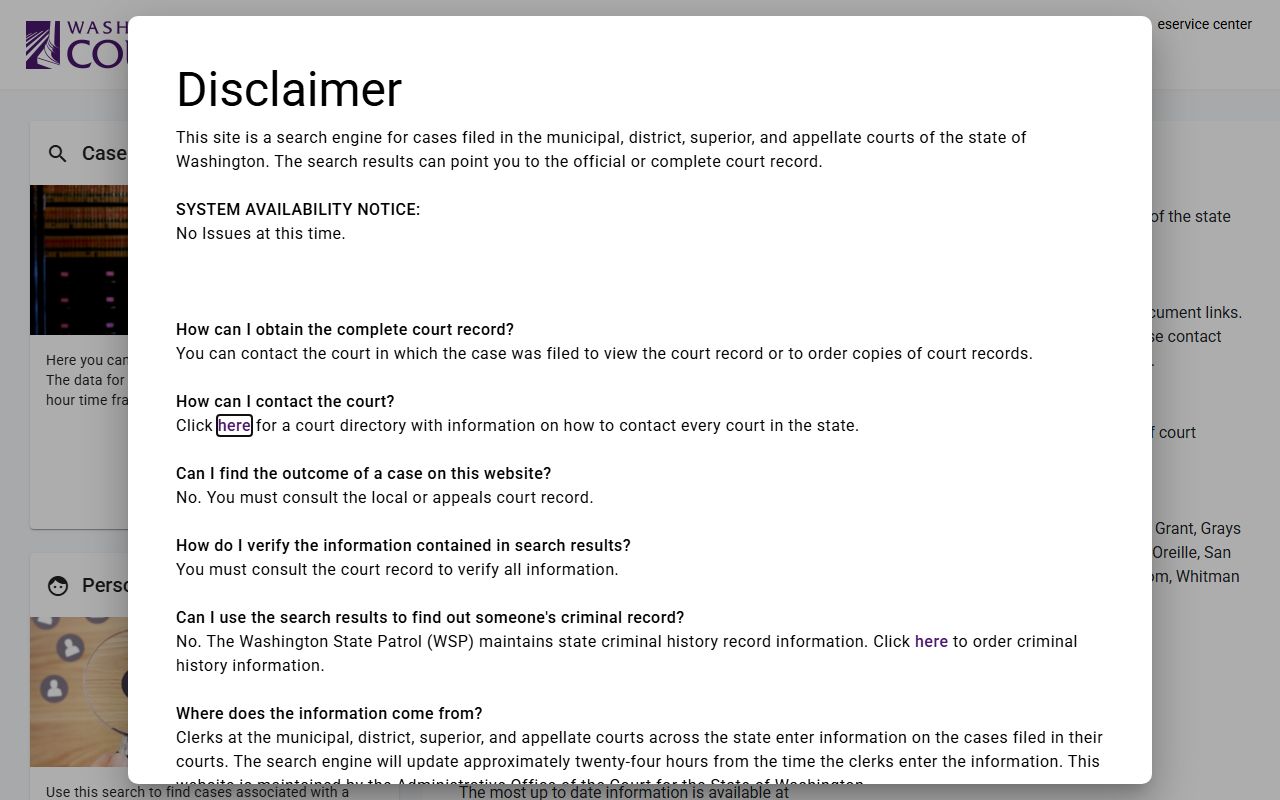
That portal can point you to the court of record even when the final document request must be made somewhere else.
The Washington State Court Directory is the best official source for court addresses, phones, and site links across Washington.
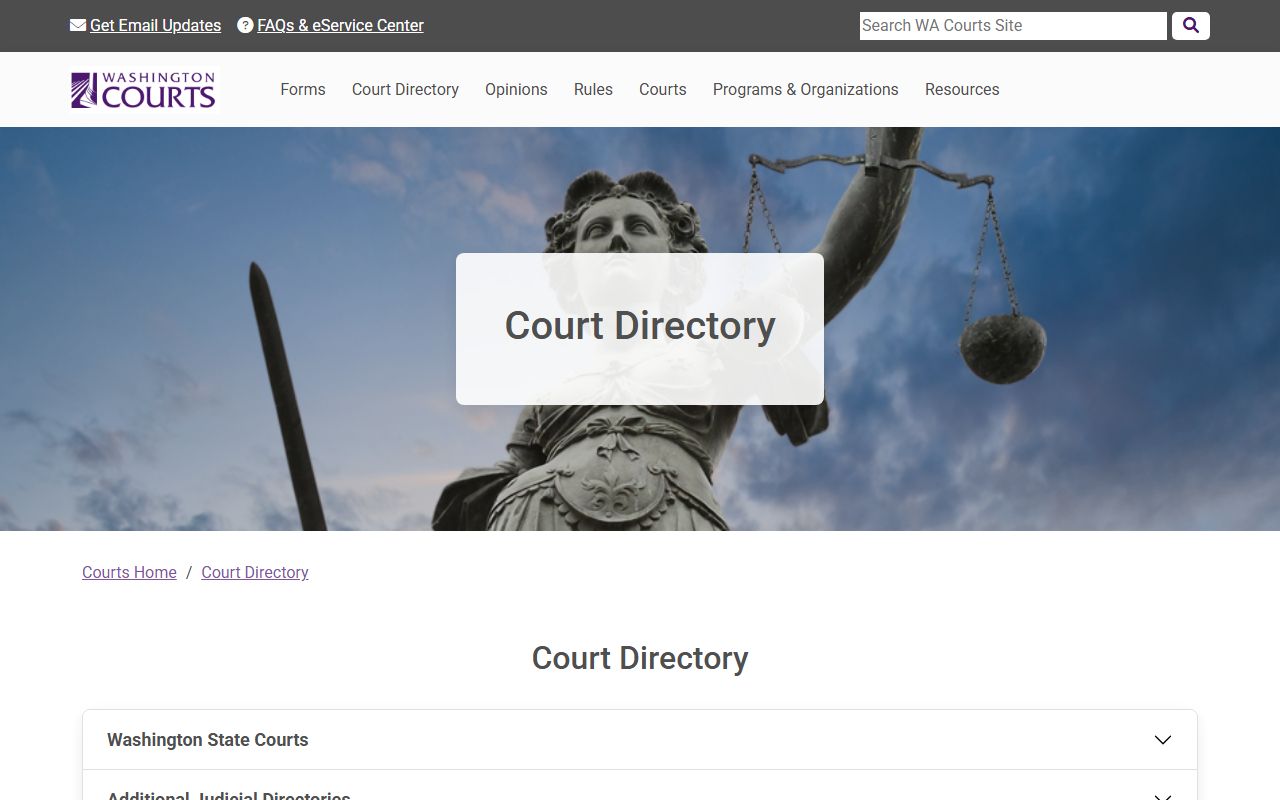
It helps connect a city or county search to the correct district, municipal, or superior court.
Chapter 46.63 RCW frames the full Washington Traffic Court Records process for infractions.
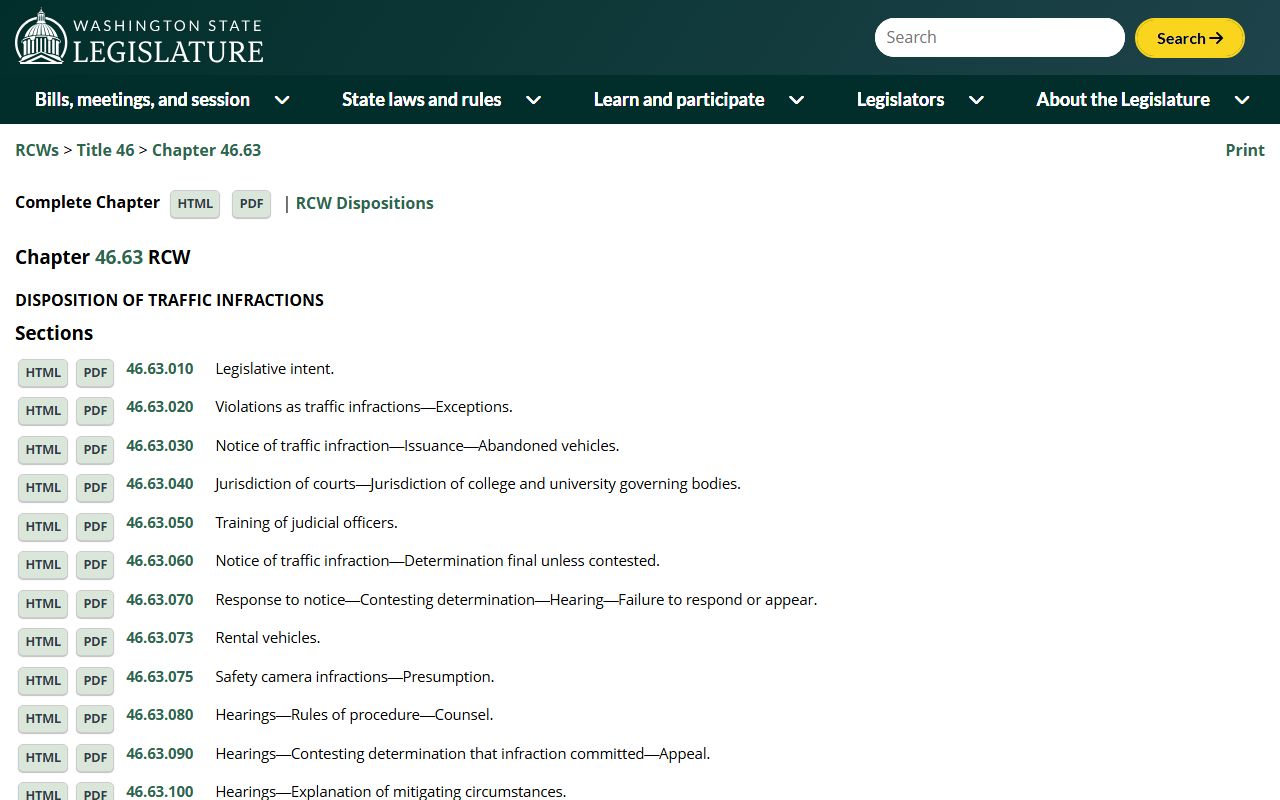
It links the notice, hearing, order, penalty, and payment-plan pieces into one statewide structure.
RCW 46.63.010 explains the legislative intent behind the traffic infraction system.
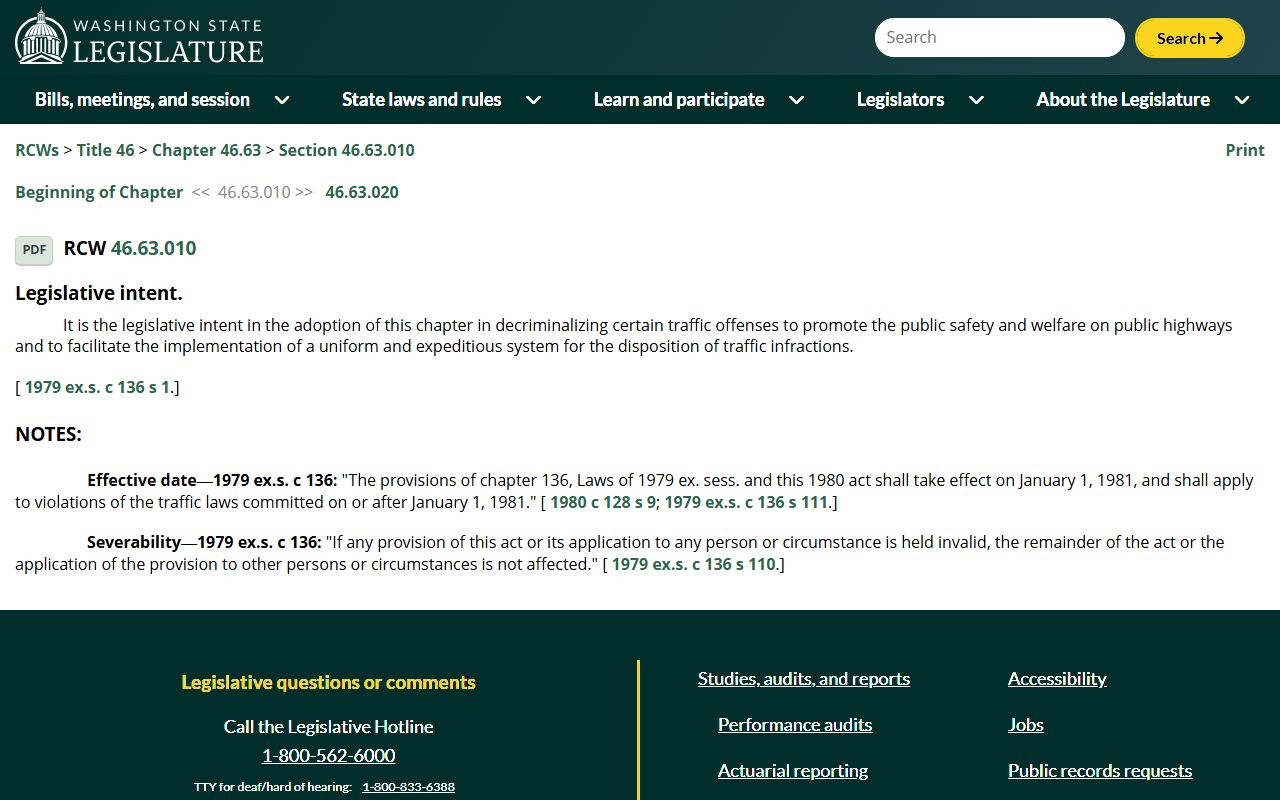
That statute shows why Washington treats many traffic matters as a uniform civil infraction system.
RCW 46.63.030 covers the issuance of a notice of traffic infraction.
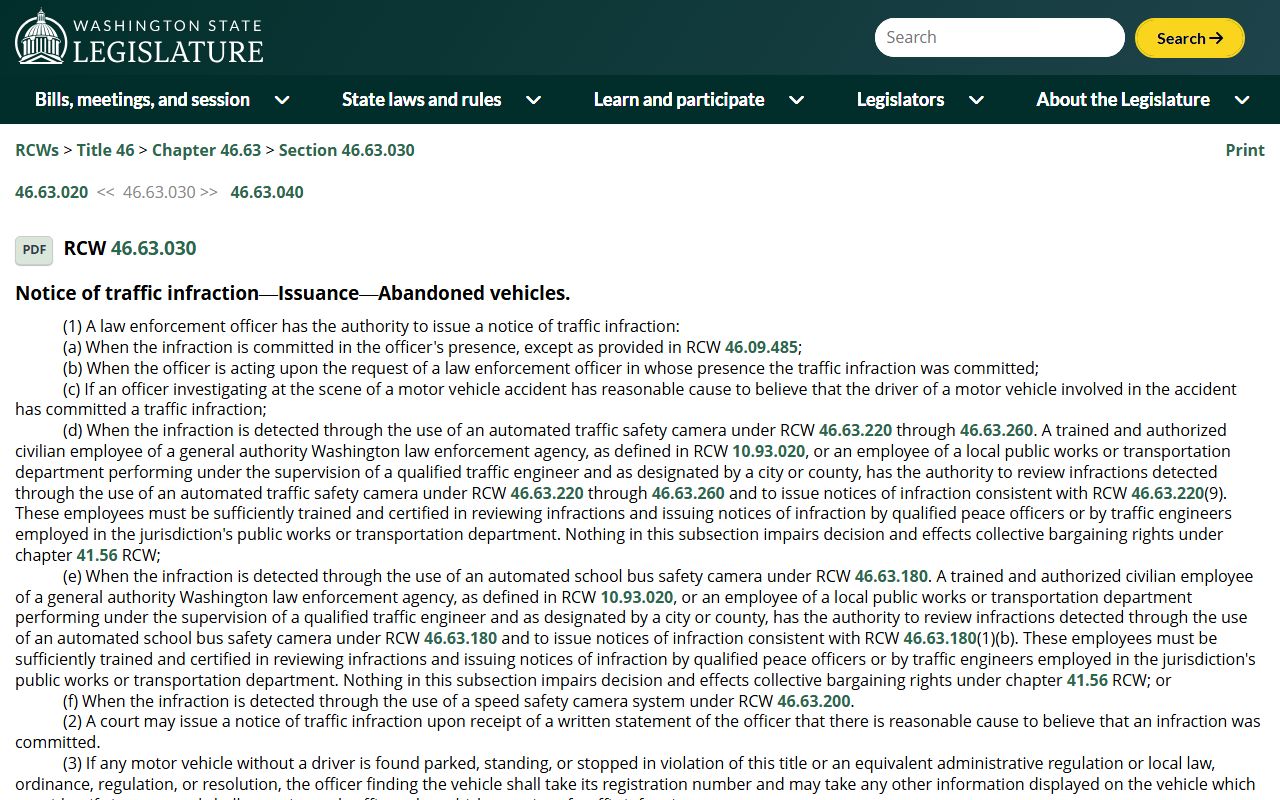
It helps explain how a case enters the record after an officer contact, crash review, or camera event.
RCW 46.63.070 gives the main response and hearing rule for infractions.
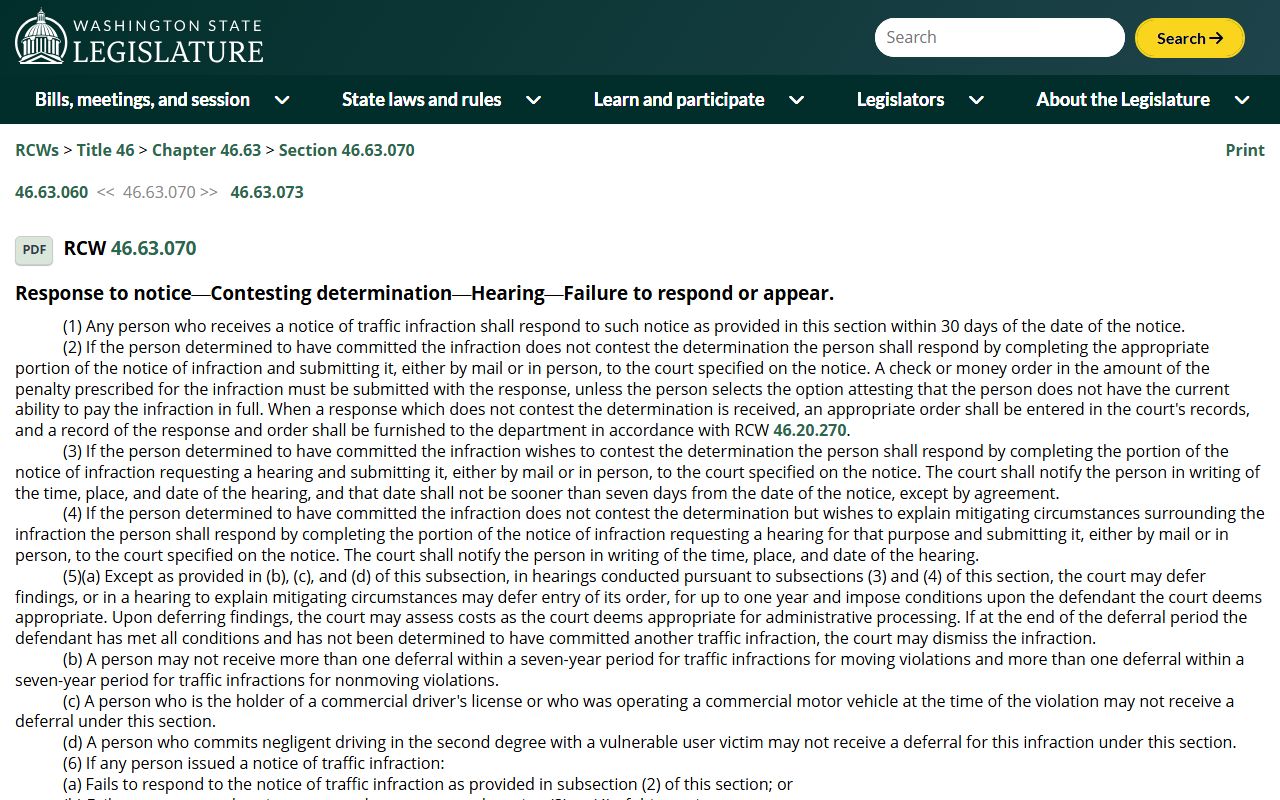
That is the statute behind the 30-day response window and the hearing paths that later show up in dockets.
RCW 46.63.110 describes monetary penalties tied to traffic infractions.
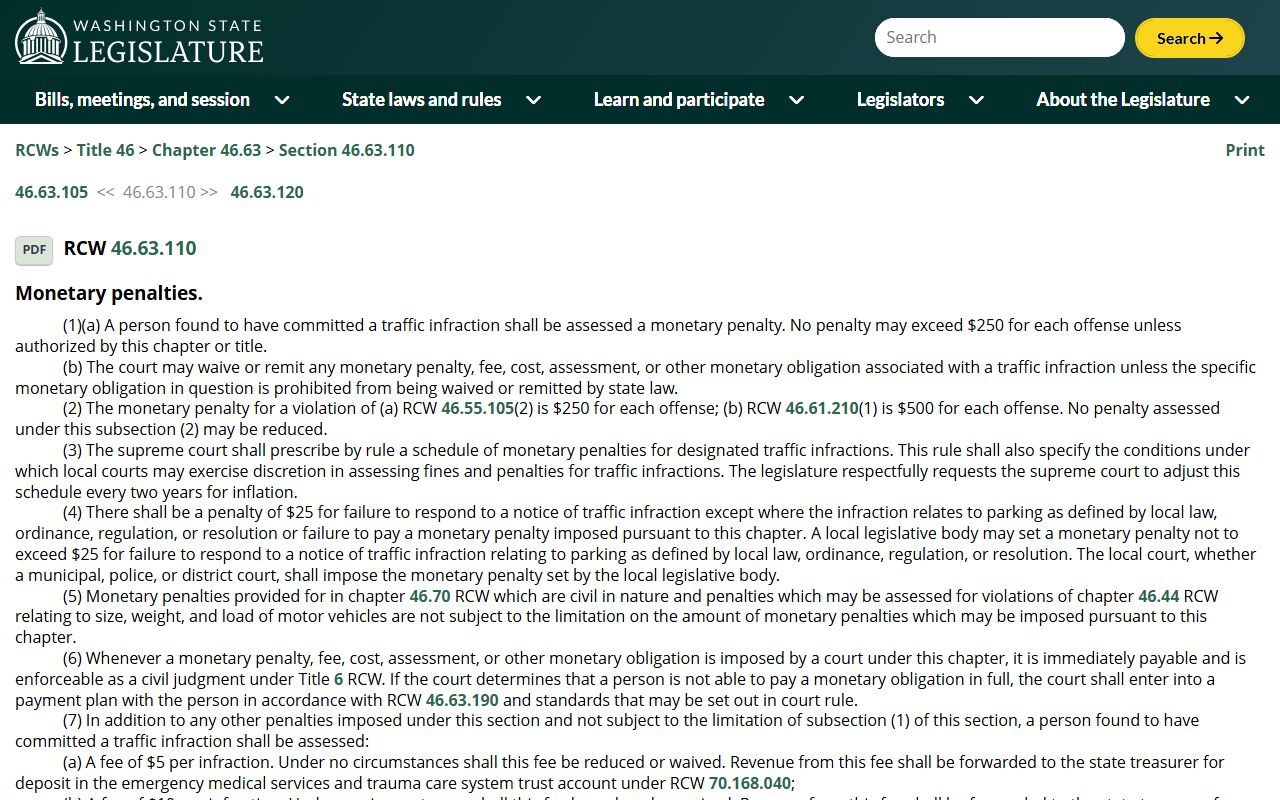
Penalty lines, added assessments, and related entries often trace back to this section.
RCW 46.63.120 covers the civil nature of the court order and the ability to waive, reduce, or suspend penalties.
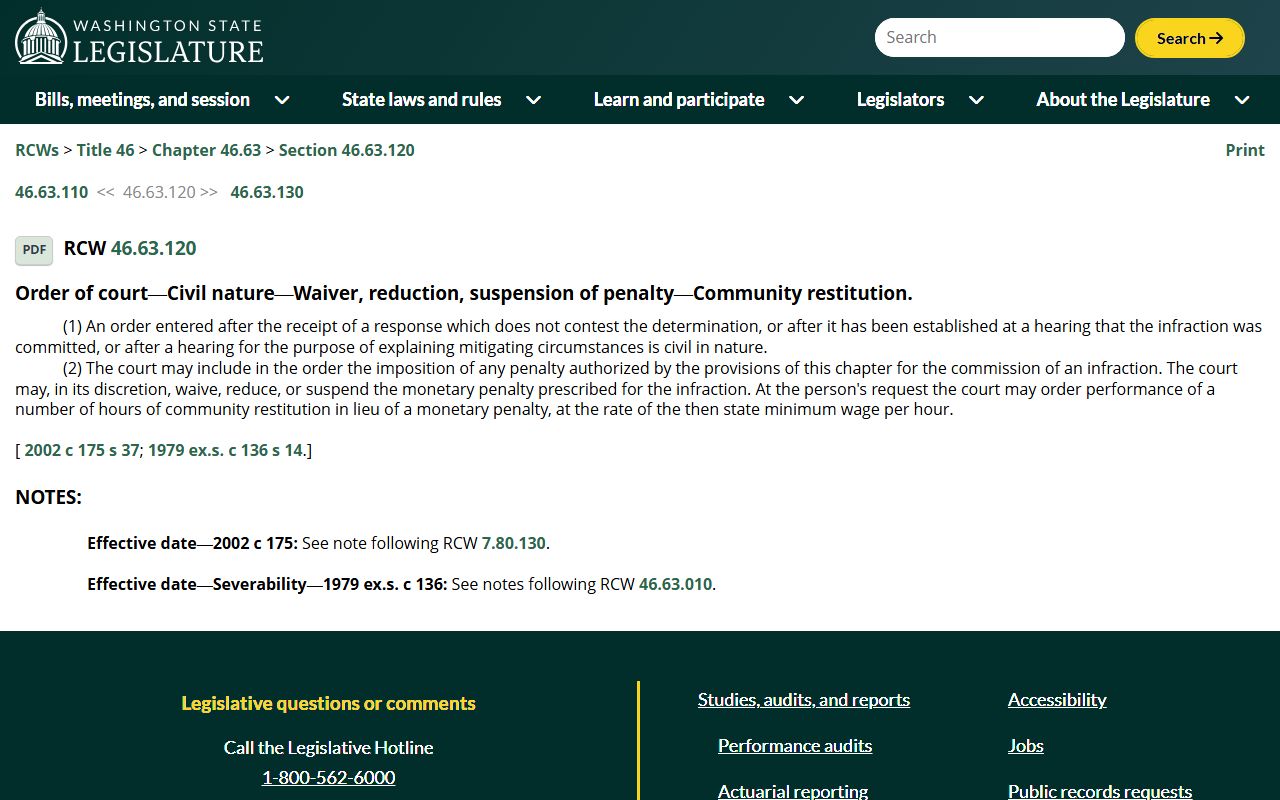
That context is useful when a docket shows an order after mitigation or a contested hearing.
RCW 46.63.190 explains payment plans for unpaid traffic obligations.
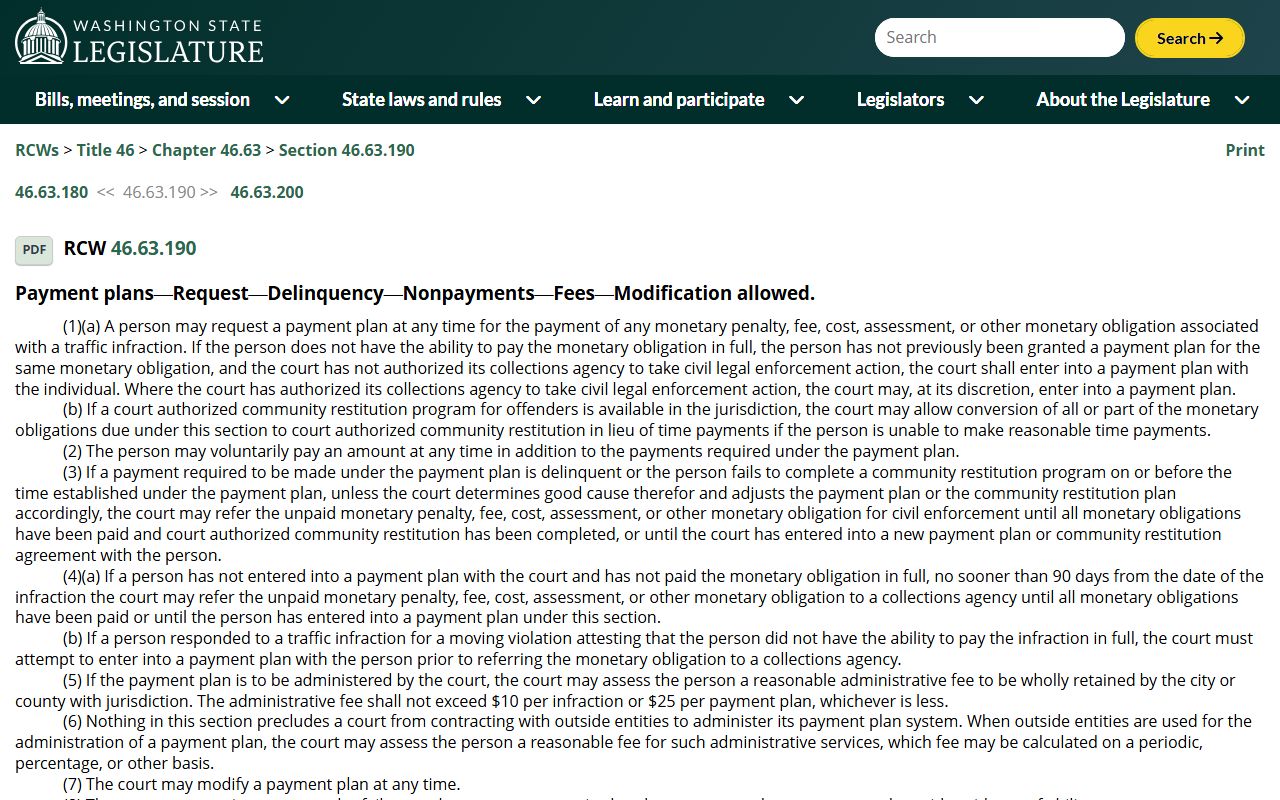
Older Washington Traffic Court Records often remain active because payment-plan events keep posting after the hearing date.
RCW 46.63.220 lays out the rules for automated traffic safety cameras.
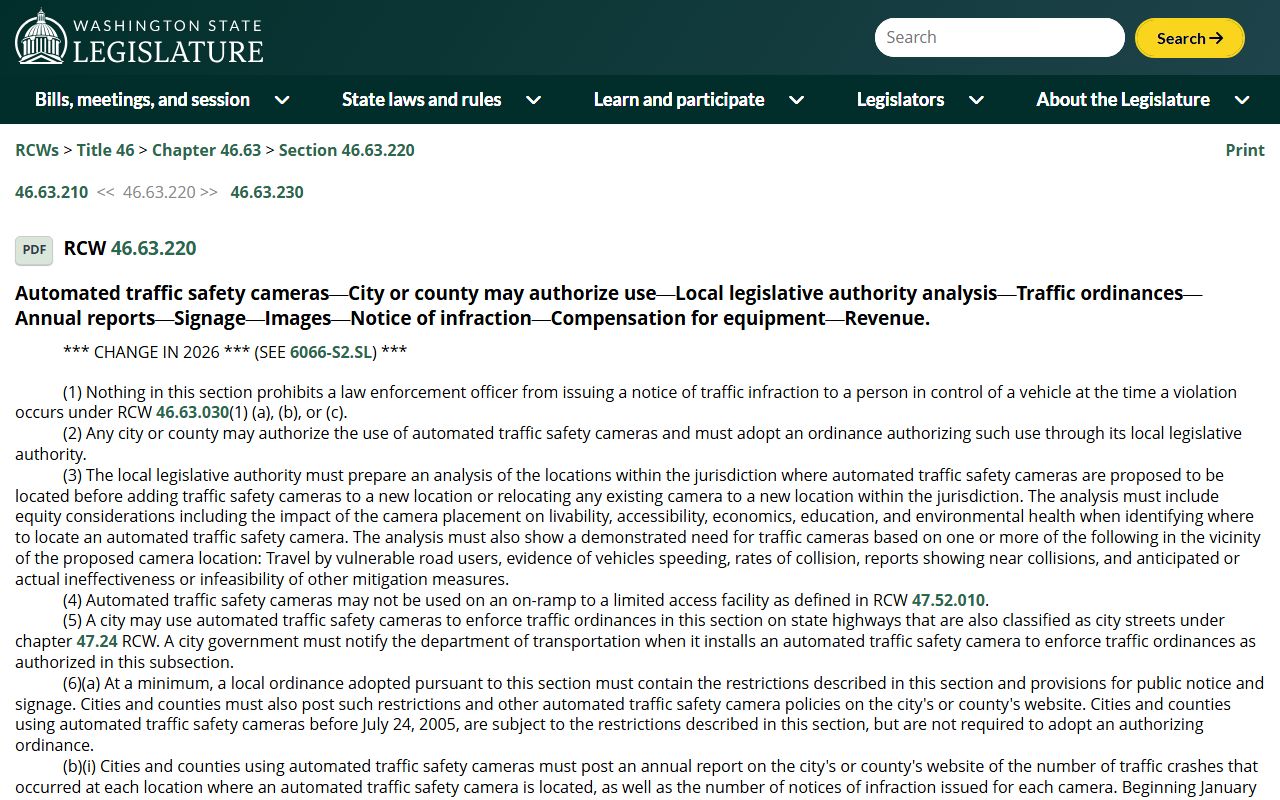
Camera files follow their own notice and processing rules, but they still create searchable court records.
The Washington State Digital Archives gives another access point for digitized court material.
It can be a strong option when you have a case number and need a copy path tied to participating county clerks.
The Department of Licensing is separate from the court system but still matters in traffic cases.
It manages driving-record and licensing functions that may be affected by traffic case outcomes.
The Washington State Patrol page in the research is a separate statewide records source and not the court file itself.
It does not replace the court file when you need the actual hearing record, order, or copy request path.
Are Traffic Court Records Public in Washington
Most Washington Traffic Court Records are public, but public access is still shaped by court rules, case type, and the level of detail you want. The research points to GR 31 and related court access rules as the access framework that many local courts cite. That usually means public users can search core case data and request copies, while sealed material, protected identifiers, and some restricted records are handled differently. A simple portal result is usually open. A complete document set may still require a direct request.
The same public-access theme appears in the Digital Archives research and in local clerk guidance across Washington. Search first. Confirm the court. Then ask for the document that fits your need. That approach keeps a Washington Traffic Court Records request focused and helps avoid a slow or incomplete reply. Note: If the statewide portal warns that case information may be inaccurate, rely on the court of record for the most current answer.
Browse Washington Traffic Court Records by County
Washington Traffic Court Records are often easiest to find once you narrow the search to the county court system that holds the file. Use the county pages to find local record access notes, clerk contacts, and court links.
Washington Traffic Court Records in Major Cities
City traffic cases may be filed in a municipal court, a district court, or a county court structure that serves the city. The city pages explain those local paths and point to the right court pages where possible.